
The Evolution of the Tool
Healing is not a passive act of “talking.” We view therapy as the engineering of a different response to reality. It is the process of recalibrating a nervous system that has become maladapted to its environment.
To understand our work, one must understand the lineage of our tools. Cognitive Behavioral Therapy (CBT) is the bedrock—the logical foundation of modern psychology. However, Dialectical Behavior Therapy (DBT) is its high-performance successor. As Blackburn DBT therapist Larry Hymes explains,
“standard therapy often fails when changing your thinking isn’t effective in a moment of acute distress. DBT fills that gap: we teach you how to change your behaviors first, which eventually forces the mind to follow.”
CBT: The Logic of the Mind
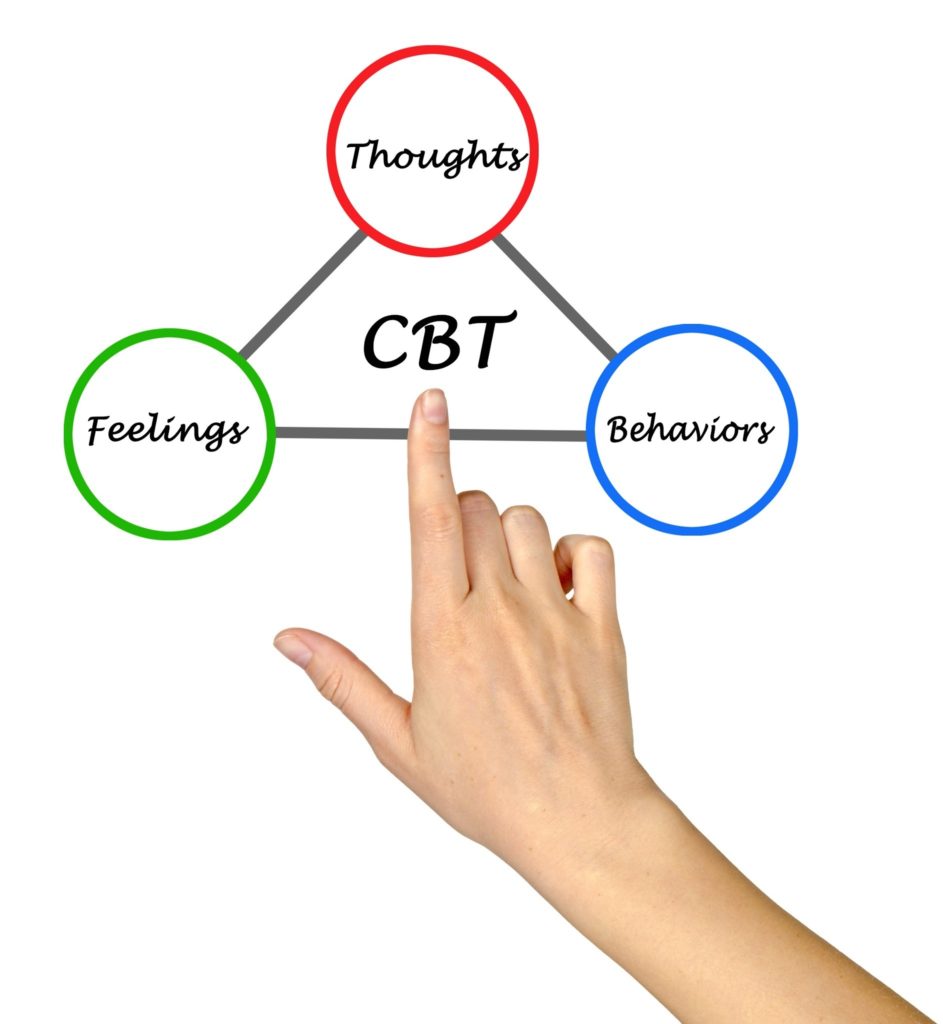
CBT operates on the Cognitive Triangle: the recursive loop between Thoughts, Feelings, and Behaviors. It is an analytical framework that treats the mind like a debugger treats code.
- The Mechanism: We identify “cognitive distortions” or the systemic errors and lies your brain tells you under stress, and replace them with evidence-based reality.
- The Stoic Core: CBT demands logic over impulse. If you can change the thought, you can change the trajectory of the life.
- The Limit: CBT assumes the “hardware” is functioning well enough to process logical software. But when the hardware itself is overheating, logic alone cannot extinguish the fire.
DBT: The Dialectic of the Spirit
When logic fails to extinguish the internal fire, we move to the Dialectic. Blackburn believes in the marriage of clinical care with spiritual care: taking scientifically proven methods and applying them to the “Middle Path.”
The Four Pillars of the Cooling System
- Mindfulness: The practice of inhabiting the “Now” to prevent the mind from time-traveling into past trauma or future anxiety.
- Distress Tolerance: The art of enduring the moment without making it worse. It is the development of mental scar tissue.
- Emotion Regulation: The medical calming of the nervous system. This down-regulates the amygdala when it pulls the fire alarm unnecessarily, allowing for small changes that accumulate into total transformation.
- Interpersonal Effectiveness: Managing the friction of human contact and learning to ask for what you need without destroying the relationship.
Technical Breakdown: CBT vs. DBT
| Feature | CBT | DBT |
| Primary Goal | Changing dysfunctional thoughts. | Balancing Change with Radical Acceptance. |
| Philosophy | Logic & Rationality. | Dialectics (Synthesis of opposites). |
| Nervous System | Top-down (Brain to Body). | Bottom-up (Behavior to Brain). |
| The Friction Point | When logic isn’t enough to stop the pain. | When you realize behavior change fixes the thought. |
Radical Acceptance
There is a misconception that “acceptance” is just giving up. We believe the opposite: Acceptance is the only path toward change. Giving up helps no one and stalls progress. Acceptance is the sober recognition of reality that allows you to finally move through it. Change is the opposite of giving up.
The Integrated Approach
We do not believe in a “one-size-fits-all” recovery. We utilize the precision of CBT to map the architecture of the problem, while deploying the intensity of DBT to survive the solution.
As Larry Hymes notes, the goal is to convince the client that “changing behavior in the moment will lead to changed thinking for the long haul.” By integrating these two modalities, we address the person as a whole: a biological entity, a logical mind, and a spiritual presence.
Ready to engineer a new response? Reach out to the Blackburn team for a comprehensive clinical assessment to find your specific path toward the middle path.